

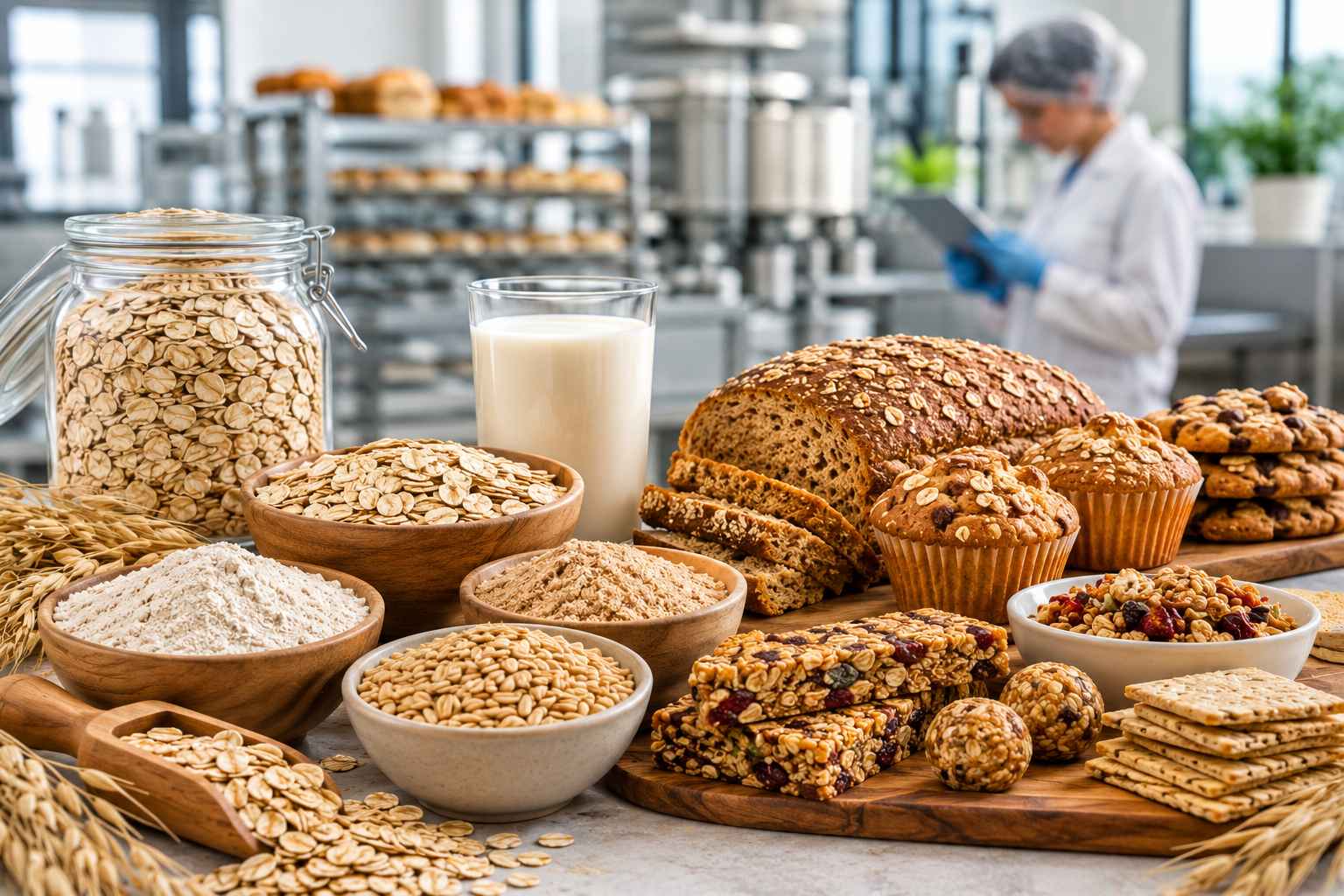
Oats have long been a breakfast staple, commonly used in foods such as oatmeal, granola, and cereal. Today, however, food manufacturers are using oat ingredients in a much wider variety of foods like baked goods and snacks, beverages and even innovative food formulations. Oats are growing in their usefulness for product development due to their versatility in texture, flavor and functionality.
Why Oats Are Becoming a More Versatile Ingredient
Oats are more than just a well-loved flavor. Oat ingredients have the potential to provide texture, structure, moisture, taste and nutrition in a variety of formulations depending upon the processing used.
The following ingredients are common to oats:
- Whole oat flour
- Oat flour
- Oat bran
- Rolled oats
- Steel-cut oats
- Oat fiber
- Oat flakes
- Specialty oat ingredients
This versatility enables manufacturers to choose the right ingredient that meets the desired properties in the final product.
Oat Ingredients in Bakery Products
Bakery products are among the most natural applications for oat ingredients beyond breakfast foods. Other baked goods that can use oat flour include cookies, muffin, breads, crackers, and snack cakes. Can add a mild, slightly nutty taste, and can help maintain texture and overall taste.
Oat ingredients can also be used with wheat flour or other grains in special blends for manufacturers.
For instance, oat flour can be used in:
- Cookies and biscuits
- Muffins
- Artisan or sandwich breads, such as whole-grain loaves
- Crackers
- Snack bars
- Baking mixes and pancake mix
Oat ingredients can also be used to create products that feature whole grains, or alternative grain formulations.
Oats Are Moving into the Snack Category
Oats are also increasingly used in snack applications, where they can contribute texture, flavor, and whole-grain appeal. Consumers are looking for convenient foods that are not made up of empty calories alone. Oats are useful for improving the texture and grain composition of processed foods.
Oat ingredients can be added to:
- Granola and snack bars
- Energy bites
- Breakfast-style cookies
- Baked snack products
- Clusters and crisps
- Trail mixes
- Filled snack products
They can be used in both sweet and savory applications, providing the manufacturers with lots of flexibility.
Oats in Beverages and Alternative Formulations
The growth of oat-based beverages has also demonstrated the potential for oats beyond traditional solid foods.
Oat ingredients can be added to beverage formulations and/or products with a dairy-alternative claim in which manufacturers are looking to achieve a smooth mouthfeel and positioning as a familiar grain alternative.
The use of oat ingredients in foods is also being looked into, including smoothies and other nutrition products, as well as others where texture and functionality of the ingredient are important.
This is indicative of a general food manufacturing trend over the last few years to take familiar ingredients and use them in new ways, not just add these to new traditional groups.
Oats Can Support Product Texture and Functionality
The functional versatility of oats is one of the major benefits that the manufacturers of these products have.
The oats can provide content of:
- Texture: Oat ingredients may provide body, softness, chewiness or desired particulate texture.
- Moisture management: Some of the ingredients in oats may have a moisture management effect in formulated and baked goods.
- Flavour: Oats taste mild and can be used in a variety of recipes with other flavours such as fruits, spices, chocolate, nuts, etc.
- Easy to formulate: can be used in a variety of product categories, which gives manufacturers the opportunity to try new concepts out.
This is because of their properties as a nutritional component, as well as formulation ingredients.
Oats and the Demand for Familiar Ingredients
Consumers are more likely to read the ingredients on their food labels. Grains and ingredients recognizable to consumers may provide a competitive edge in foods that offer simple food choices. Oats are perfectly in line with this trend.
They are popular, so they can be easily accessed by consumers, and versatile enough to allow manufacturers to innovate. Although oats are traditionally associated with oatmeal, their applications extend far beyond the breakfast bowl.
Oats can be used in a wide variety of different ways in a cookie, cracker, snack bar, beverage or bakery product and can give it a unique product identity.
Opportunities for Food Manufacturers
Oats' versatility as a breakfast grain opens several opportunities for manufacturers and product developers.
Oats provide an opportunity to spread the risk of a product portfolio. Oat-based solutions are available to manufacturers who are already familiar with working with traditional grains but wish to explore a new avenue of grain-based solutions without venturing into a completely new category of ingredient.
Oats offer variation in texture and flavor. The various oat formulations can yield distinctly different results, offering choices to formulators seeking to improve a formula.
The use of oat ingredients in the products can help support product concepts that are of interest to the consumers of these whole grain products, such as whole grains, plant-based foods, convenient snacking, and recognizable ingredients.
Choosing the Right Oat Ingredient
Not all oat ingredients will act the same.
When choosing an oat ingredient, manufacturers should take into account the following:
- Desired texture
- Particle size
- Flavor profile
- Processing requirements
- Moisture characteristics
- Finished-product application
- Storage requirements
- Production scale
Using an experienced supplier of ingredients can help to make this process more efficient. A good supplier can assist manufacturers to determine which ingredients to use and how they will need to be consistent as a product goes from development to commercial production.
The Future of Oat Ingredients Is Bigger Than Breakfast
In today’s world, the oat ingredients have expanded beyond the traditional breakfast box, providing various manufacturing possibilities in bakery, snacks, beverages and other innovative formulations. The right selection of the oat ingredient can help ensure the taste, texture and functionality of the products.
New England Flour supplies flour and grain ingredients for food manufacturers seeking reliable ingredients for a range of applications. Whether developing a new oat-based product or optimizing an existing formulation, selecting the appropriate oat ingredient can help manufacturers move efficiently from product concept to commercial production.
