

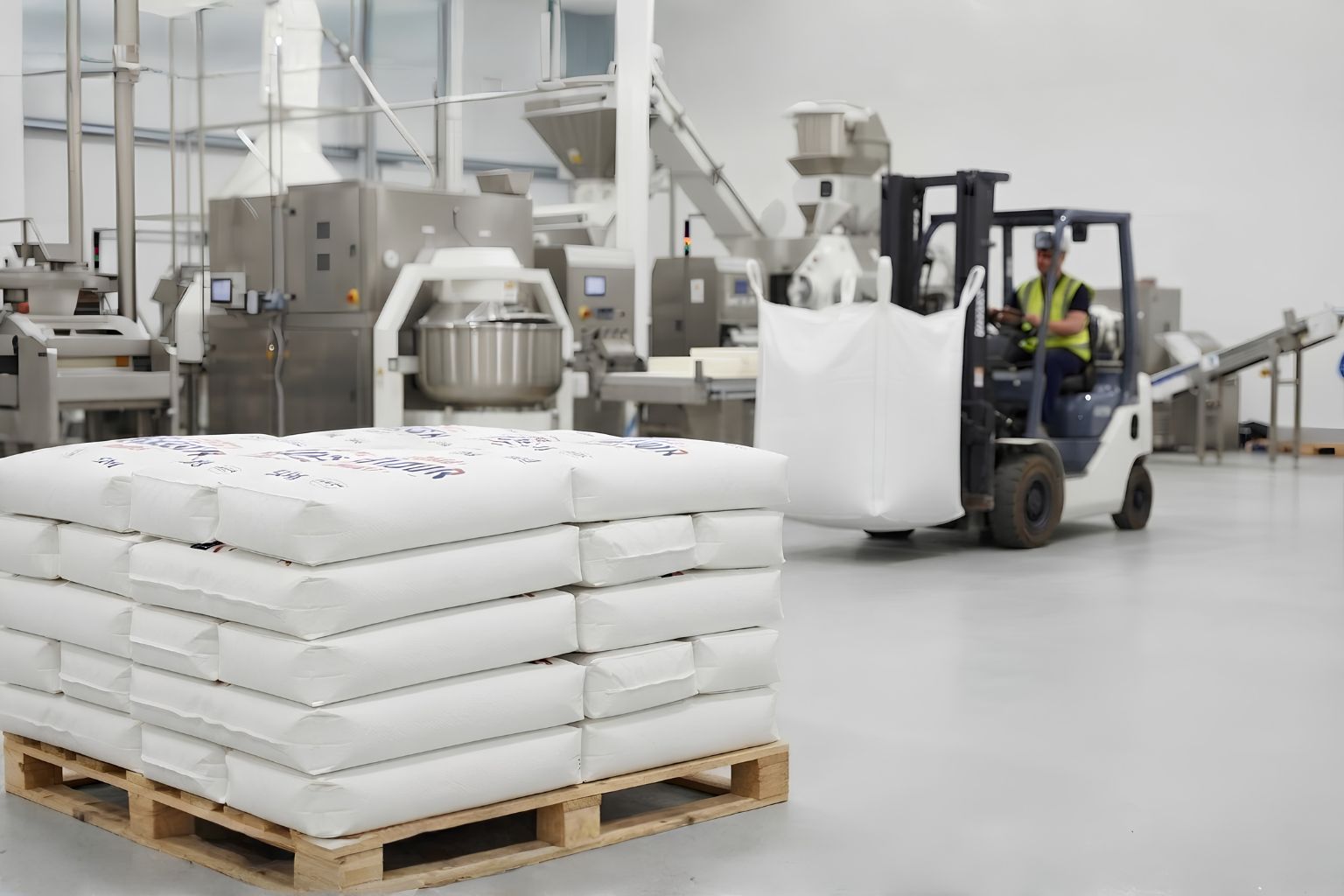
Consistency is crucial to every production run. From bread to pasta, snack to ready-to-eat product, flour is a key ingredient of product quality. However, when buying flour in bulk many manufacturers are only too concerned with its price. It is not just about the lowest price you can get when buying in bulk
A successful bulk flour purchasing strategy involves selection of appropriate flour specifications, assessing supplier reliability, effective inventory management and quality control from delivery to production. This handbook provides a guide to the major points to take into account for manufacturers when making their purchasing decisions.
Why Is It Important to Buy Flour in Bulk?
Some of the top raw materials used by food manufacturers is flour. Buying it in bulk can provide a number of benefits such as:
- Lower cost per unit
- Improved production efficiency
- Consistent product quality
- Reduced packaging waste
- Smoother stock control
- Strategically managed stock
- Stronger supplier relationships
These benefits are only realized if it is based on quality, specification and long-term supply reliability and not price.
1. Start with the Right Flour Specification
All flour is not created equal. The slightest variation in ingredients can impact upon dough handling, dough texture and appearance, and end product uniformity.
If you are ordering in bulk, it is best to decide on the specifications your production needs such as:
- Protein content
- Ash content
- Moisture level
- Extraction rate
- Wheat variety
- Milling consistency
- Particle size
Ask suppliers for in-depth specification sheets, and make sure each shipment is of the correct quality to fulfill production needs. Standardised specifications minimize batch to batch variation and help to maintain product quality on a large scale.
2. Match Flour to Your Application
There are different types of flour needed for different kinds of products.
There are various types of commercial flour, such as:
Bread Flour
A flour with a high protein content for making bread, pizza dough and bagels.
All-Purpose Flour
A multi-purpose application that can be used in numerous baked goods, mixes and foodservice applications.
Cake Flour
Flour specifically formulated for use in making delicate baked goods such as soft cakes, cupcakes and other soft items.
Pastry Flour
Great for pastries, biscuits, pie crusts and laminated doughs.
Semolina Flour
It is coarse and has a high protein content and is preferred for pasta preparation.
3. Assessment of Suppliers Beyond the Cost
There is an understanding that despite the cost being economical in the short run, it doesn't mean that the same will continue to be economical in the future.
An ideal flour supplier should offer:
- Consistent quality of the product
- Clear specification sheets
- Food safety certifications
- Delivery schedules
- Technical support
- Traceability of the product
- Order flexibility
Reliable suppliers minimize production downtimes and increase confidence for future planning.
4. Understand Food Safety and Quality Standards
Food safety is of utmost importance in the food supply chain. In assessing suppliers, check on their quality management system and/or relevant certifications.
Look for evidence of these:
- Food safety programs that are based on HACCP
- Lot traceability
- Regular quality testing
- Correct storage and handling procedures
- Documented manufacturing controls
Good quality systems can play a part in minimizing risks and in ensuring compliance with the regulation.
5. Select the Appropriate Packaging Method
Depending on the size of the production volume, bulk flour may be packed in different packaging formats.
Some of these options include:
- 25 kg bags
- 50 kg bags
- Bulk tote packages
- Pneumatic tankers
- Delivery via silos
The appropriate packaging format would depend on:
- Production volume per day
- Storage capacity
- Handling equipment available
- Labor availability
Bulk packaging can be beneficial for high-production volume facilities because not only does it minimize wastage from packaging materials, but it also provides short handling time.
6. Plan Inventory Carefully
Having too much inventory will result in higher storage expenses as well as moisture, pests and degradation of flour quality over time.
Some of the best practices in inventory management are:
- Forecasting production demand
- Maintaining safety stock
- The use of FIFO (First In, First Out) stock rotation system
- Keeping track of expiry/best by dates
- Analyzing seasonal demand behaviour
Keeping a balance between inventory and other factors helps to prevent issues.
7. Store Flour Properly
No matter the quality of the flour, it can still go bad if it's stored improperly.
To maintain freshness:
- Keep flour in a dry place in a cool area
- Keep out of dampness
- Avoid exposure to pests
- Maintain clean storage areas
- Keep an eye on the heat and humidity
- Rotate inventory regularly
The performance of flour can be maintained and shelf life can be extended by proper storage. Flour may suffer from deterioration in quality over a period of time before noticeable spoilage occurs due to moisture content and temperature changes.
8. Think about Supply Chain Reliability
Production schedules depend on reliable deliveries.
Before selecting a supplier, think about:
- Lead time for delivery
- Coverage of geographical area
- Emergency delivery capability
- Inventory availability
- Logistics system
- Response to communication
By having a supplier with reliable inventory and logistics, you reduce the risk of delay in production.
9. Total Cost of Ownership
The cost which has been offered for the lowest amount is not necessarily the one with the lowest cost.
Keep in mind all the costs associated with purchasing the flour, including:
- Cost of transportation
- Cost of storage
- Production efficiency
- Quality of the product
- Reduced waste
- Administrative cost
Higher quality flour will reduce production loss and will lower the cost.
Common Bulk Purchasing Mistakes to Avoid
By avoiding these common mistakes, many manufacturers can prevent themselves from having to deal with expensive problems:
- Selecting suppliers because cost alone
- Ignoring flour specifications
- Exceeding the stocking level
- Poor inventory rotation
- Inadequate storage conditions
- Not checking for food safety records
- Failing to monitor suppliers' performance on a regular basis
These risks can be minimized and production consistency enhanced with a proactive purchasing approach.
Conclusion
One of the most efficient flour procurement systems is one that includes proper product specification, dependable suppliers, proper storage and efficient inventory management to guarantee the reliability of production.
We understand the requirements of production at New England Flour. It is our responsibility to our clients to assist them in making the right decision regarding the specification of the flour and to offer dependable bulk supply solutions for them.
