

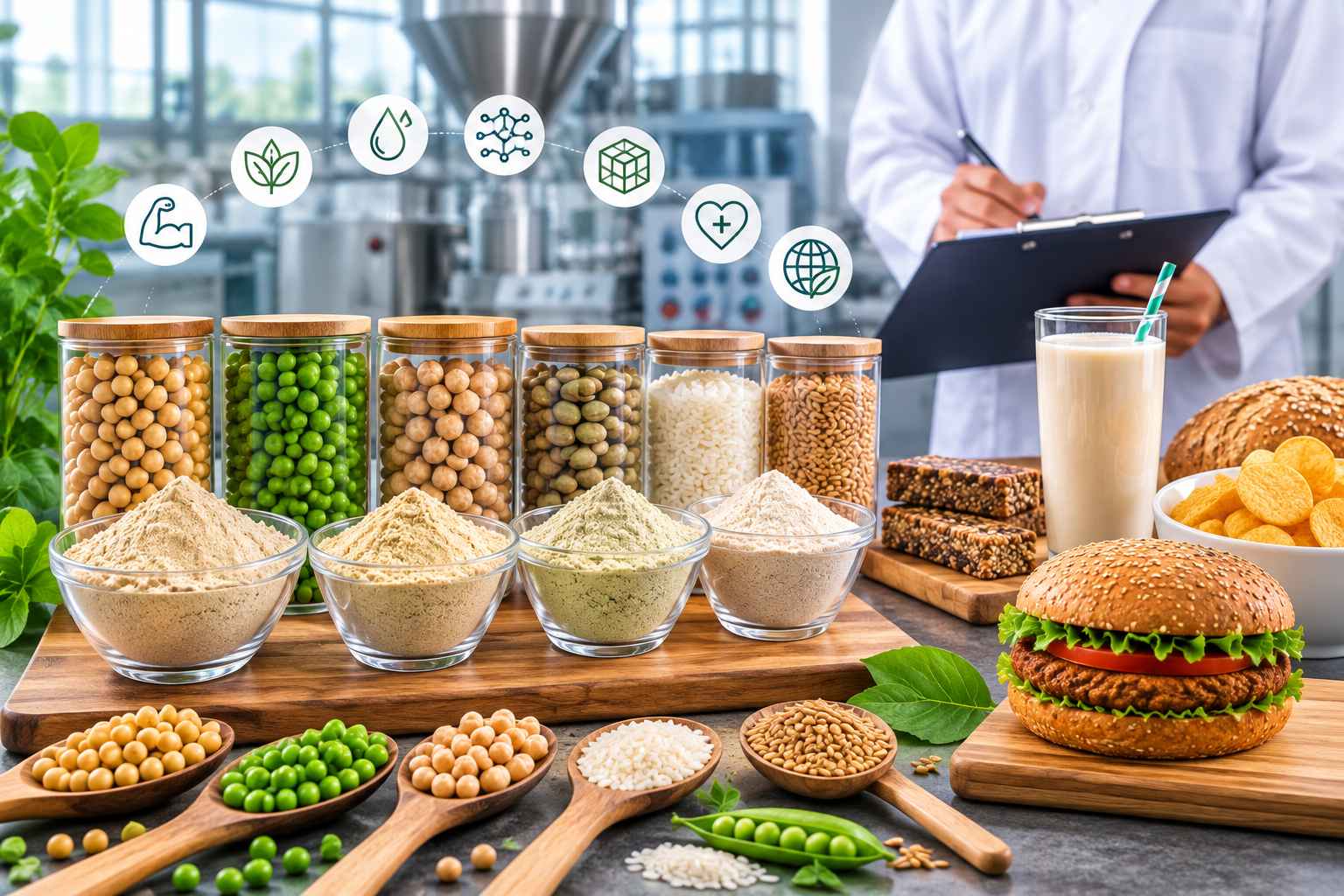
In choosing a plant-based protein source, it may not be simply a matter of going for the source with the most protein content for food producers. It is essential to choose an option that will work well in terms of the formulation of the final product. Not only that, the chosen protein source needs to fulfill certain nutrition criteria as well as considerations of cost-effectiveness and supply.
It is capable of influencing the taste, texture, stability and consumer appeal of various food products like meat substitutes, drinks, baked goods, snacks and ready-made foods. Some of the considerations that must be taken into account include those listed below.
The Reasons for Choosing Plant-Based Protein
The proteins found in plants can be derived from many sources, such as soy, pea, wheat, rice, chickpeas, fava beans and others. They have different characteristics in terms of their functionality as well as their nutritional attributes.
The problem that manufacturers encounter is to identify a protein rather than any protein. The issue is to locate the protein that serves well in a specific application.
Important considerations include:
- Protein content
- Flavor and aroma
- Solubility
- Water absorption
- Texture
- Processing stability
- Allergen considerations
- Nutritional profile
- Cost
- Supply availability
The chemical properties of a protein that make it a good beverage may not make it a good meat alternative.
1. Consider the Final Product
Inquire about the use of the protein and the desired properties of the desired product.
Proteins that are needed for structure, chewiness and binding may be necessary for meat alternatives. Tensile strength and the use of textured soy and pea proteins are generally considered for these uses.
For protein beverages, it is desirable that ingredients are well soluble and dispersible. Excessive sedimentation, grittiness and undesirable flavor are all caused by unwanted proteins that have a negative impact on the consumer experience.
Proteins that provide nutrients and retain the desirable volume, texture and moisture of bakery products may be useful to bakery products.
Ingredients for snack products may be subjected to heat processing and still impart the desired nutrient and sensory properties.
So, the application should lead to selection of the protein and not the other way round.
2. Compare Different Plant Protein Sources
All protein sources have their own benefits.
As it has a relatively high protein content, soy protein is widely used due to its versatile functional properties. It can be used for products like meat substitutes and nutritional products. Yet soy is a primary allergen and might not be appropriate for all formulations.
Pea protein is now gaining popularity as it provides a valuable nutritional profile and can be used in a variety of applications such as beverages, snacks, meat alternatives and more. It is still subject to careful consideration because of its flavor and texture characteristics.
Elastic and structuring properties can be achieved in bakery products and meat alternatives with the use of wheat protein, especially vital wheat gluten. It does have gluten in it and cannot be used in products that are gluten-free.
Rice protein can serve as a plant protein source for some specialty and nutritional formulations, but could have different functional properties than soy or pea protein.
The use of legume proteins such as chickpea and fava bean proteins is also being considered as manufacturers look for alternative plant protein and diversify their ingredients.
3. Evaluate Functional Performance
Protein content is just one of the factors. Manufacturers need to assess the behaviour of the ingredient in the manufacturing process and storage.
Main functional characteristics are:
- Solubility: Relevant for drinks and powders, and liquid formulation.
- Moisture absorption: Affects moisture holding, texture and processing.
- Stability of mixtures of water and oil: Very important when protein is to be used to help stabilize mixtures of water and oil.
- Gelation: May affect the structure and firmness of some products.
- Foaming: Applicable for products in which aeration is important.
- Thermal stability: essential for bakery products, cooking, pasteurization or any other thermal treatments.
The measurement of these properties prior to full-scale production can help to avoid costly formulation difficulties.
4. Don't Overlook Flavor and Texture
Plant-based nutrition is a trend that consumers are interested in, but are still looking for foods to taste good. Some plant proteins may contain earthy, bitter, grassy or other unique flavors. Another problem is texture, which may be a problem in beverages or high-protein formulations.
Thus, manufacturers should do sensory testing in addition to technical testing.
Consider:
- Taste
- Aroma
- Mouthfeel
- Grittiness
- Aftertaste
- Color
- Overall consumer acceptance
Technically efficient protein is not necessarily the best ingredient if consumers don't like the end product.
5. Check Nutritional Requirements
The product's nutritional goals should also be supported by the protein.
Manufacturers should be mindful of:
- Protein concentration
- Amino acid profile
- Digestibility
- Fiber content
- Fat content
- Mineral content
- Nutritional claims
Manufacturers may also combine complementary plant proteins to improve the overall nutritional profile while achieving the functional properties required for a specific application.
6. Consider Allergens and Labeling
The choice of ingredients also impacts regulatory and labelling considerations. In other markets, such as soy and wheat, there are allergen concerns. Manufacturers need to be aware of the requirements and assess cross-contact hazards when sourcing and producing.
It is important to have clear ingredient specifications and to have the supplier provide reliable documentation to ensure accurate ingredient labeling and consistency.
7. Evaluate Supply and Cost
Although in the lab a protein can work just fine, it can be impractical if there are supply problems or the price varies too much.
Manufacturers should evaluate:
- Supplier reliability
- Availability
- Minimum order quantities
- Pricing stability
- Lead times
- Storage requirements
- Quality specifications
- Lot-to-lot consistency
In addition to cost/g of ingredient, make sure to take into account cost/finished product. The higher cost of a protein could also be associated with more favourable functionality and less formulation optimization, which could lead to better overall production economics.
Making the Right Protein Choice
Protein content alone is not the key factor when selecting a plant protein source. Other factors to take into consideration are function, taste, nutrition, possible allergen concerns, processibility, price, and availability. The characteristics of the ingredients like solubility, water/oil binding, emulsifying properties, foaming, and gelatinization may have an impact on the quality of the end product.
The correct ingredient is always one that suits the application, manufacturing process, and nutrition needs. Working with an experienced ingredient supplier can help manufacturers evaluate plant protein options based on their specific formulation, processing, and sourcing requirements. New England Flour provides plant-based protein and ingredient solutions to support food manufacturers in developing products that meet their nutritional and functional goals.
