
Consistency in product schedules demands much more than just machinery and skilled workers in a commercial bakery or food manufacturing facility. Materials need to be available at the right time in adequate amounts and with the right specifications. Even with an effective production line, a lack of materials such as flour, sugar, yeast, or any other material could lead to costly delays.
The role of procurement in minimising this problem is vital since they deal with ensuring the supply of the right materials and handling variable market conditions. This is important since procurement involves good management and comprehension of purchasing as part of the whole business process.
1. Start With Production Requirements
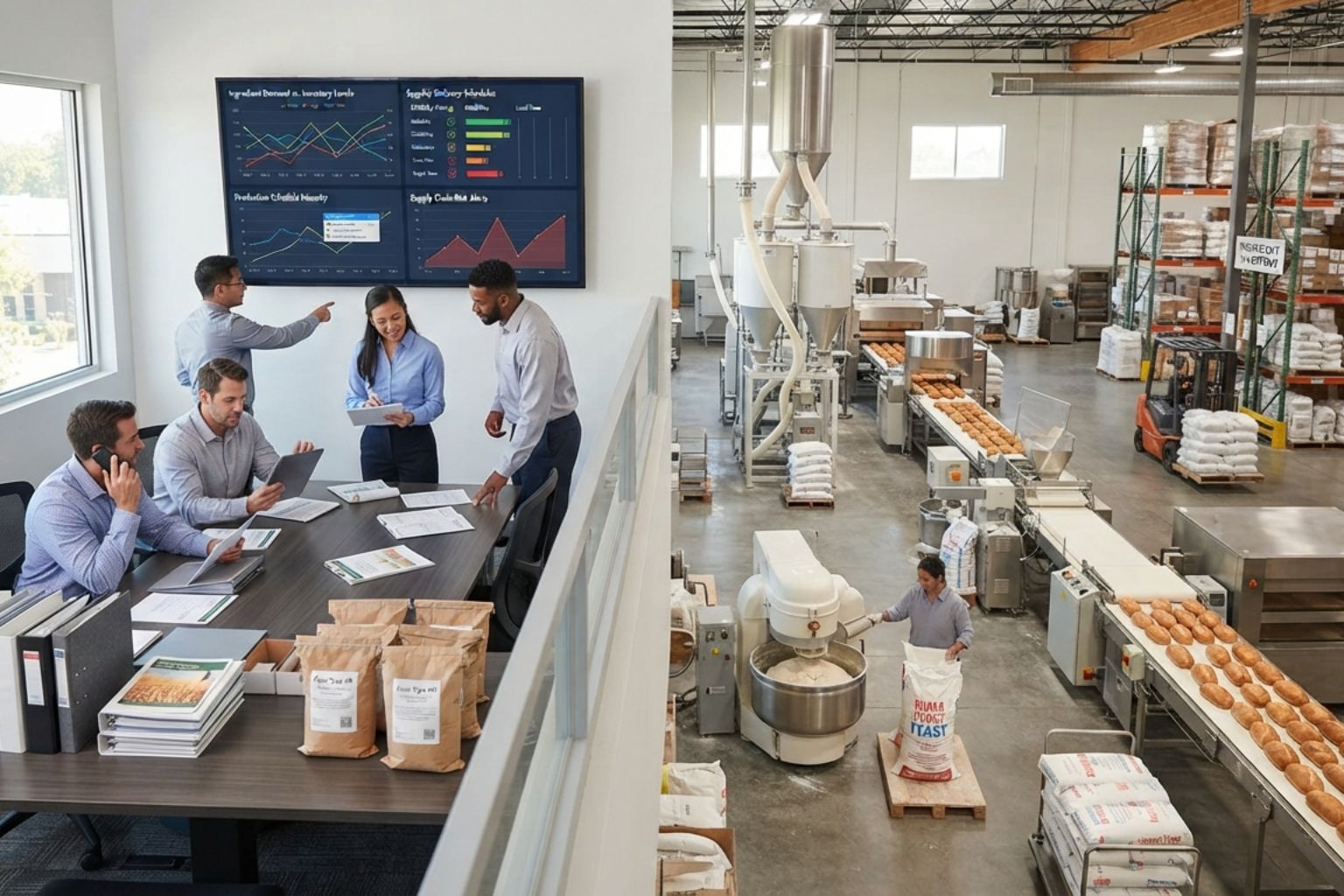
The process of procurement starts with understanding the needs of production. Procurement groups work with production managers, inventory controllers and quality control staff to know the materials that will be required, the quantity and the time at which they will be required. Materials that will be required for the next period's production are specified in the production plans, the formulation of the raw materials and demand forecasts. For example, in order to produce more bread, it is necessary to ensure there is enough flour, salt and yeast for production before production increases.
Failure to order the required quantities disrupts the production process, while ordering excessive amounts raises storage costs. A proper procurement plan considers the current inventory level, open purchase orders, suppliers' lead times and safety stocks, among other considerations.
2. Manage Supplier Availability and Lead Times
The possibilities of transport delays, seasonality of availability, and even weather effects may happen. Another issue that could be faced is unexpected increased demand from suppliers and the availability of agricultural products such as wheat, which are affected by the state of crops and market changes.
The procurement team needs to know the lead time needed for the supplier to make deliveries and the reliability of the delivery schedule of the supplier. Sometimes, the ingredients are needed with a longer lead time, especially when there is high demand. Good communication with the suppliers allows recognizing any changes that would be needed concerning the delivery times, price, and specifications before the production process.
Alternative suppliers are definitely a good option; however, substitution should not be made because of their availability. Protein and moisture content are other issues that affect the handling and fermentation of flour.
3. Use Forecasting and Inventory Controls
Demand forecasting means predicting the demand and not simply relying on the current inventory. Such factors as sales, seasons, customer orders, promotions, and production capability can serve as a base for demand forecasting. They don't remove uncertainties but offer a stronger base for making the purchasing decision about when and what to buy.
The protection is offered through inventory management. In case the inventory levels drop to the specified level, then the order is made. The buffer of safety stock is kept in order to prevent any possible delays or other problems.
Buffers that are excessive need investment, warehouse space, and can even spoil if it is a question of raw materials with long lead time or limited availability.
4. Balance Cost, Storage, and Continuity
Procurement involves more than just cost considerations. Procurement cost considerations involve not just the cost of the ingredient but the transportation cost, handling, storage, wastage, and late delivery cost of the ingredient that needs to be taken into consideration before considering the total cost of the ingredient to be used in the team.
Although there is a certain advantage of bulk procurement, this can only prove to be cost-effective if sufficient storage and demand exist. More frequent procurements will reduce storage costs, but this might raise transportation costs and be vulnerable to more fluctuations in prices.
These issues can be balanced using supplier pricing, timing, and volume of orders that meet up with the consumption pattern.
5. Coordinate Across Departments
The best time to purchase is when the occasion suits the business as a whole. There could be a growing demand for products, or there could be shortages in stock levels, or quality control could discover some problems with the vendor, or budgeting could indicate some financial constraints.
Communication must always be maintained in such a way that any minor problem can be dealt with before it turns into a production issue. The ERP system and digitalized inventory management system can be quite helpful in coordinating with each other since they integrate all the information related to the supply chain, production, inventory, and purchase orders.
But in order for technology to be useful, there needs to be accurate information available.
6. Prepare for Disruptions
A practical contingency plan outlines the essential ingredients, how much it will cost to have a shortfall of these ingredients, and what measures will be taken to deal with this problem. These measures might include additional inventory, backup sources, expedited shipments, or alternate production plans.
In case the company is dependent on flour, it is advisable to note down market reports from the agricultural industry, for instance, the weekly wheat market outlook by the U.S. Department of Agriculture.
Conclusion
Coordination of forecasts, procurement, inventory management and risk management will be needed in order to achieve the appropriate balance between raw materials availability and production requirements. It is essential to have dependable suppliers of raw materials in order to ensure the dependability of the production process for commercial bakeries and food processors.
New England Flour is a dependable supplier of flour for food manufacturers. Combining such thorough procurement planning with good supply contacts could assist in being better prepared for changing demands.
